govard.
Discuss a project
Config-Driven RAG Generation

AI Page Generator

Context-aware page generation workflow

Project Init sys_vars.json
Context
SYS>AI Page Generator shows how RAG-assisted page generation becomes a working production system with clear responsibilities, constraints, and evidence.
Role
USR>This project works as part of the AI-first delivery system: it turns source context into controlled production artifacts.
Problem
ERR>The core problem is avoiding one-off AI output and keeping the workflow traceable, reviewable and production-oriented.
Constraints
  • ■ Agent roles need explicit boundaries between retrieval, layout generation, validation, and retry.
  • ■ Configuration must define the page shape, evidence requirements, and output constraints.
  • ■ Generated pages need schema and visual checks before they can become reusable artifacts.
  • ■ RAG context must be selected before generation so the model does not invent unsupported claims.

System architecture

AI Page Generator demonstrates RAG-assisted and multiagent page generation through an experimental lab for turning structured context into validated UI output.

flowchart TD
 CONF[JSON Configs: Styles/Compositions] --> LOAD[Configuration Loader]
 LOAD --> GEN[Universal Gen Engine]

 SCR[Scraped HTML Templates] --> CHROMA[(ChromaDB / Qdrant)]

 REQ[User Request: Industry + Style] --> RAG[RAG Retrieval Engine]
 RAG --> CHROMA

 REQ --> ROUTE{Multiagent Router}
 ROUTE -- "RAG-hit / Complex" --> RAG
 ROUTE -- "Direct LLM" --> LLM[Codestral 95% / Gemini 2.5 Pro / GLM]
 ROUTE -- "Easy" --> CACHE[Local Cache]

 RAG --> WORKFLOW[Tailwind/HTML Workflow]
 LLM --> WORKFLOW
 CACHE --> WORKFLOW

 WORKFLOW --> OUT[HTML + CSS Output]
 OUT --> FIX[Contrast Fixer / QA]
 FIX --> CMS[(Directus Export)]
Config-Driven Layer Multiagent Router Dual Vector Stores Quality Assurance

System architecture

AI Page Generator demonstrates RAG-assisted and multiagent page generation through an experimental lab for turning structured context into validated UI output.

flowchart LR
 CLI[CLI Flags / Params] --> ORCH[Component Generator]
 
 subgraph Prompt Assembly Layers
 IND[Industry Context] --> ORCH
 STY[Style Tokens] --> ORCH
 COMP[Composition Rules] --> ORCH
 ELEM[Element Schemas] --> ORCH
 end
 
 ORCH --> LLM[LLM Engine]
 LLM --> PARSE[Structural Parser]
 PARSE --> RENDER[Component HTML]
CLI Parameters Prompt Assembly Context Layers
Quality pass

Links vector-search context to interface generation without letting the model invent unsupported claims.

Step 01

Architecture view

Applies validation gates around layout quality, schema compliance, and generated copy boundaries.
Step 02

Architecture view

Turns experimental page generation into a lab workflow with visible inputs and reviewable artifacts.
Step 03

Config contract

Keeps model fallback, context selection, and generated UI decisions traceable for later refinement.
Step 04

Workflow diagram

Shows how multiagent generation can be constrained enough to support real production experiments.
Step 05

Quality pass

Combines RAG context, route requirements, and generation roles before producing UI output.
Step 06

Agent role

Uses agent routing to separate retrieval, layout generation, validation, and retry decisions.
Step 07

Generation config

Keeps configuration contracts explicit so generated pages can be reproduced and audited.
Step 08

Interface view

Links vector-search context to interface generation without letting the model invent unsupported claims.
Config contract

Applies validation gates around layout quality, schema compliance, and generated copy boundaries.

Turns experimental page generation into a lab workflow with visible inputs and reviewable artifacts.

Keeps model fallback, context selection, and generated UI decisions traceable for later refinement.

Shows how multiagent generation can be constrained enough to support real production experiments.

Combines RAG context, route requirements, and generation roles before producing UI output.

Generator interfaces

From CLI utilities to full Web/GUI dashboards for controlling generation workflows and quality checks.
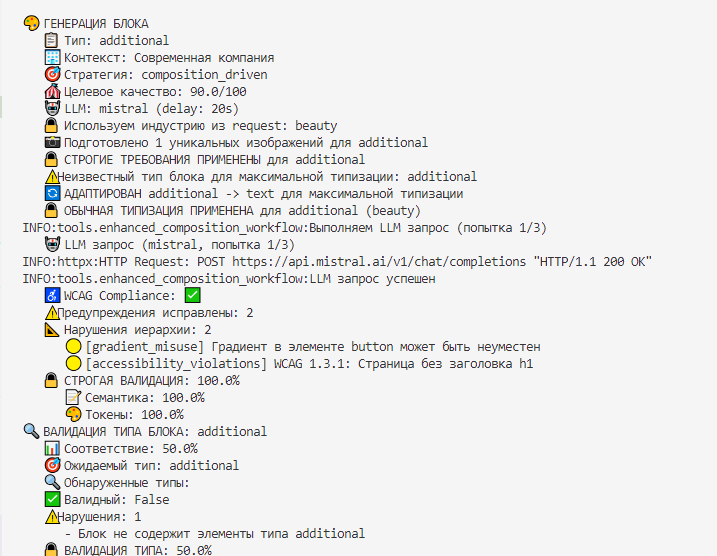
cli.png
Advanced CLI Orchestrator
Terminal CLI

Advanced CLI Orchestrator

Uses agent routing to separate retrieval, layout generation, validation, and retry decisions.

Technical specification
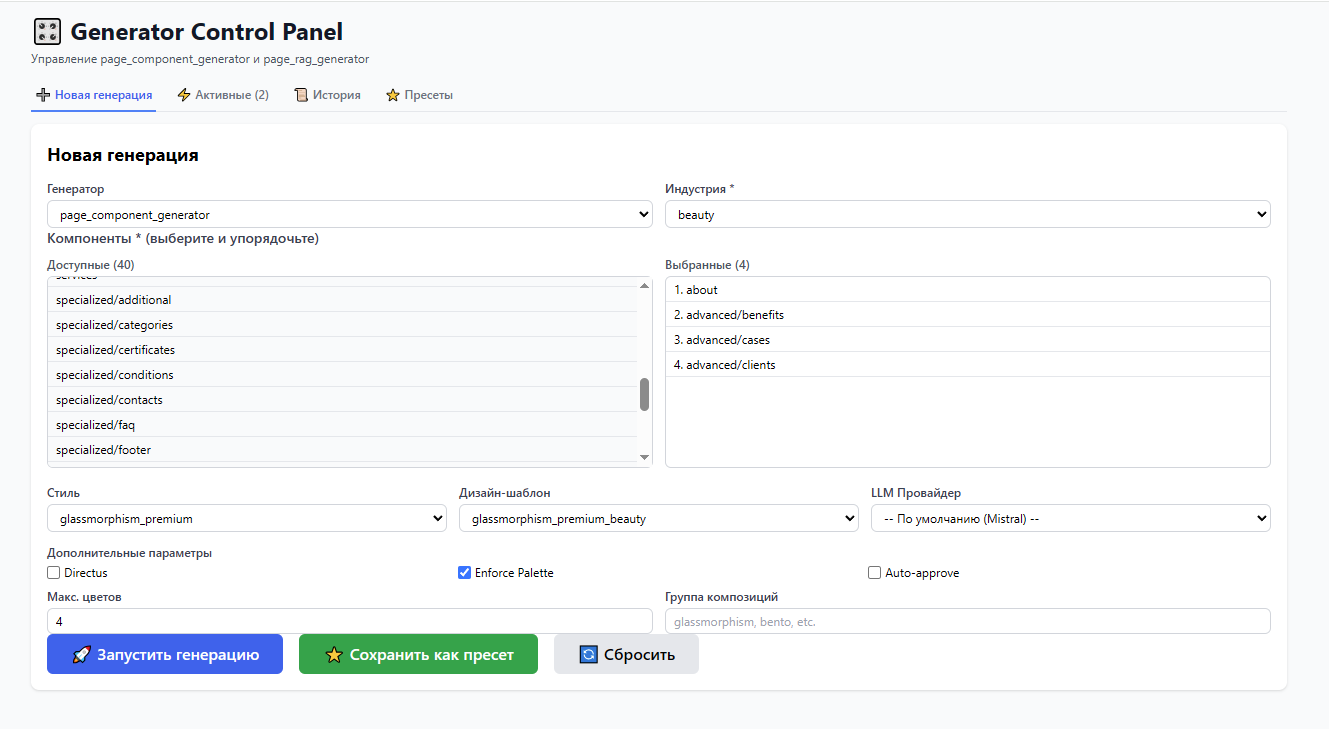
Key capabilities
Keeps configuration contracts explicit so generated pages can be reproduced and audited. Mass-Generation Benchmarking
Architecture Layer: CLI Adapters
generator-control-panel.png
Generator Control Panel (PyQt)
Desktop App

Generator Control Panel (PyQt)

Links vector-search context to interface generation without letting the model invent unsupported claims.

Technical specification
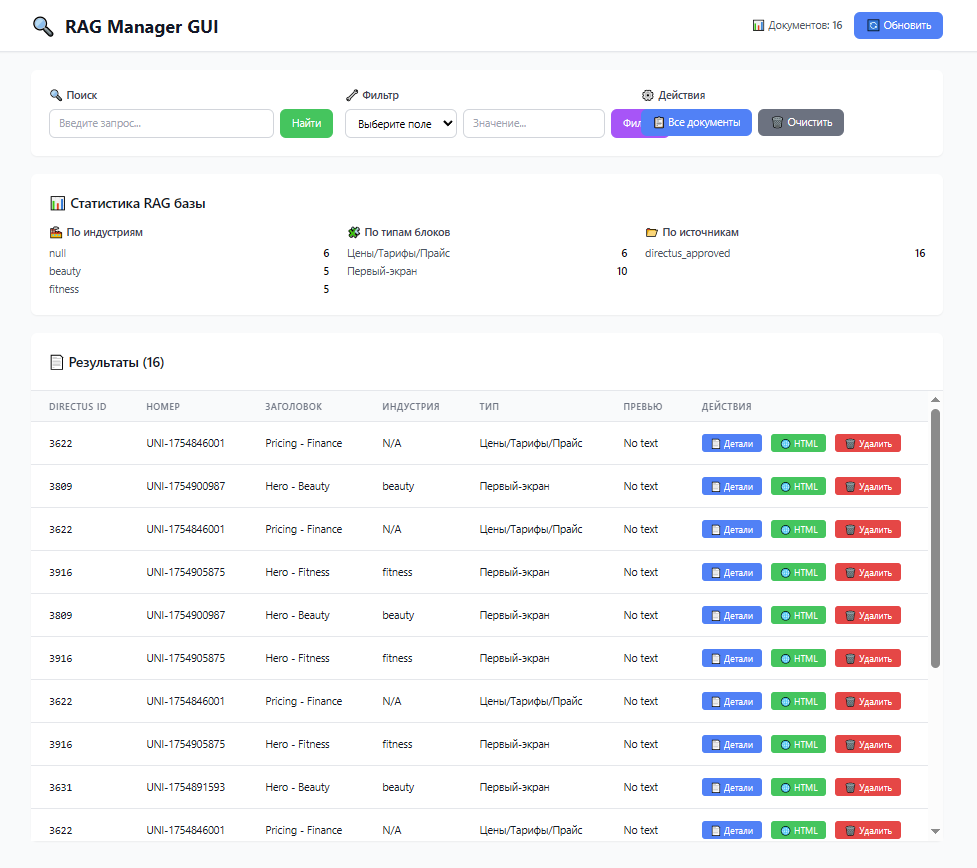
Key capabilities
Applies validation gates around layout quality, schema compliance, and generated copy boundaries. Turns experimental page generation into a lab workflow with visible inputs and reviewable artifacts. Keeps model fallback, context selection, and generated UI decisions traceable for later refinement.
Architecture Layer: PyQt Frontend
rag-manager.png
RAG Manager & Vector Store Control
RAG Control

RAG Manager & Vector Store Control

Shows how multiagent generation can be constrained enough to support real production experiments.

Technical specification
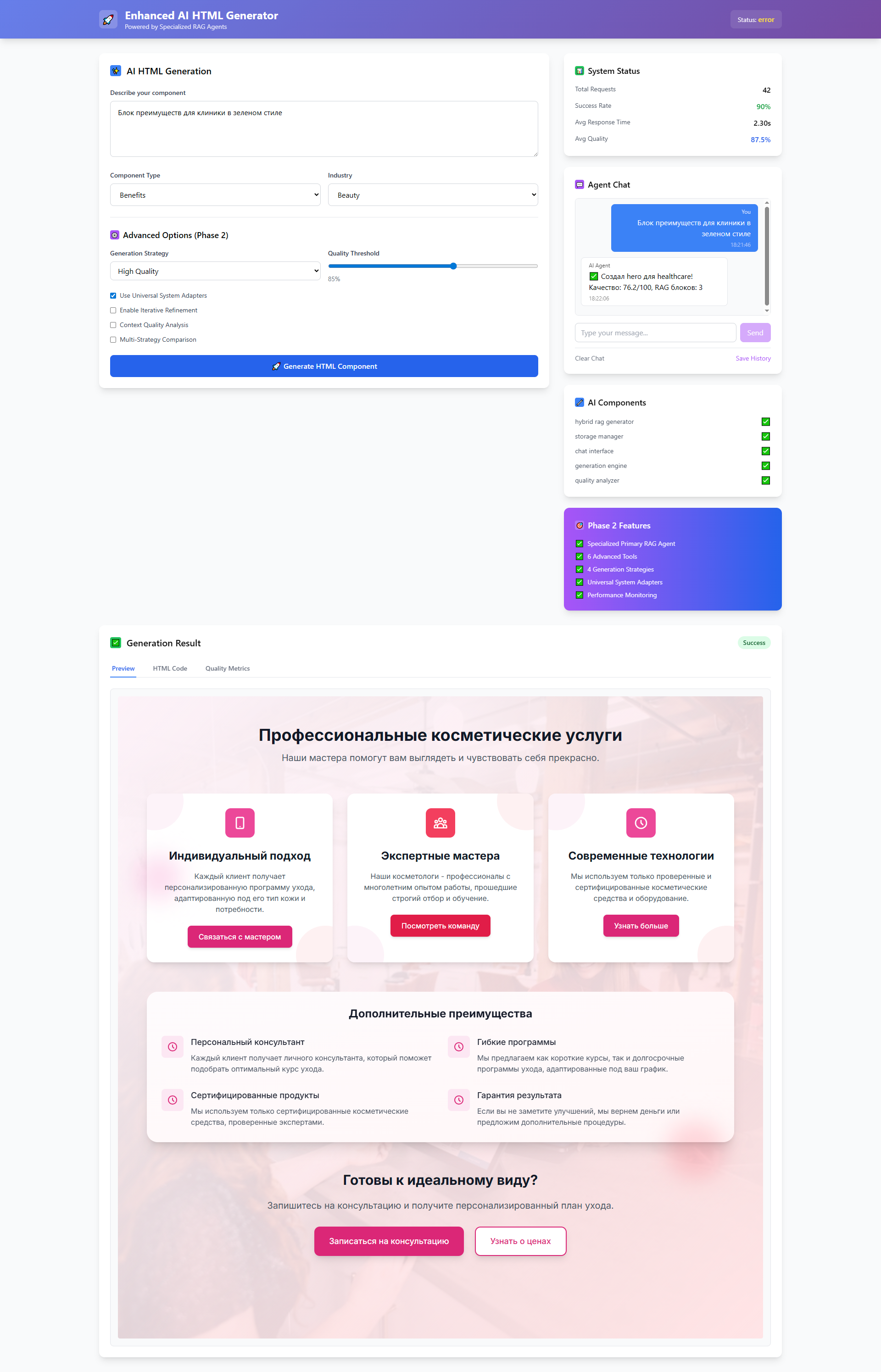
Key capabilities
Vector Management Meta Analysis HTML Injection
Architecture Layer: Knowledge Management
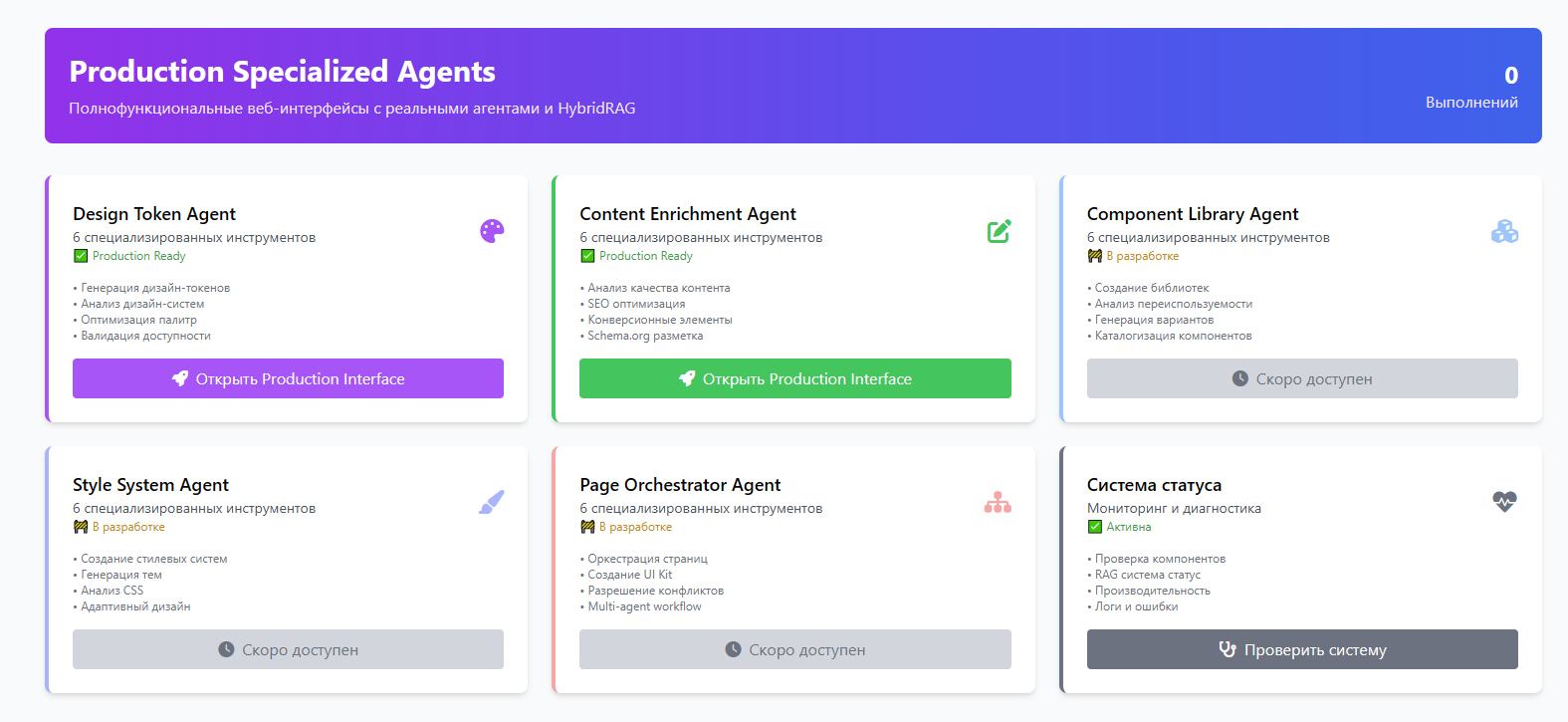
enhanced-web.png
Enhanced Web Dashboard
Power Interface

Enhanced Web Dashboard

Combines RAG context, route requirements, and generation roles before producing UI output.

Technical specification
Key capabilities
Uses agent routing to separate retrieval, layout generation, validation, and retry decisions. Keeps configuration contracts explicit so generated pages can be reproduced and audited. Links vector-search context to interface generation without letting the model invent unsupported claims.
Architecture Layer: Web UI
production-web.png
Production Pipeline Controller
Production Hub

Production Pipeline Controller

Applies validation gates around layout quality, schema compliance, and generated copy boundaries.

Technical specification

Key capabilities
Mass Queue Execution CMS Sync Stability Metrics
Architecture Layer: Pipeline UI

RAG input

01

RAG input

Uses agent routing to separate retrieval, layout generation, validation, and retry decisions.
02

Quality pass

Keeps configuration contracts explicit so generated pages can be reproduced and audited.
03

Config-Driven Architecture

Links vector-search context to interface generation without letting the model invent unsupported claims.
04

Architecture view

Applies validation gates around layout quality, schema compliance, and generated copy boundaries.
05

Quality Gates & Benchmarks

Turns experimental page generation into a lab workflow with visible inputs and reviewable artifacts.
06

RAG context

Keeps model fallback, context selection, and generated UI decisions traceable for later refinement.

Results Gallery

3000+ section sets
Beauty Salon
Premium

Beauty Salon Landing

export: 20260215_201252

Beauty Pass ≥ 90
Beauty Center
Aesthetic

Beauty Center

export: 20260218_195627

Aesthetic Pass ≥ 94
Consulting Hub
Corporate

Consulting Hub

export: 20260205_015917

Business Pass ≥ 92
Financial Advisory
Modern B2B

Financial Advisory

export: 20260205_002628
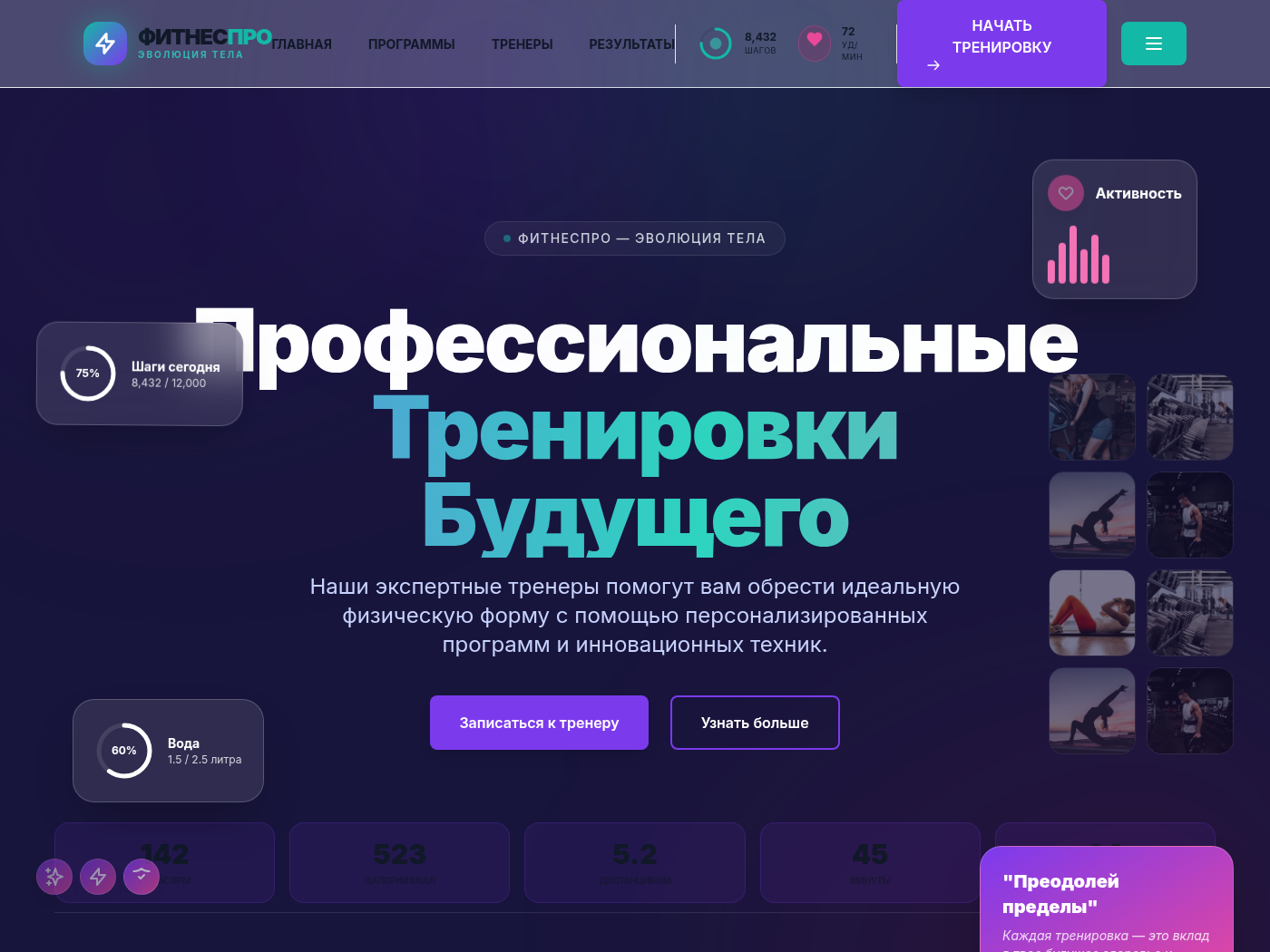
Finance Pass ≥ 89
Fitness Landing
Cyber HUD

Fitness Landing

export: 20260205_215737
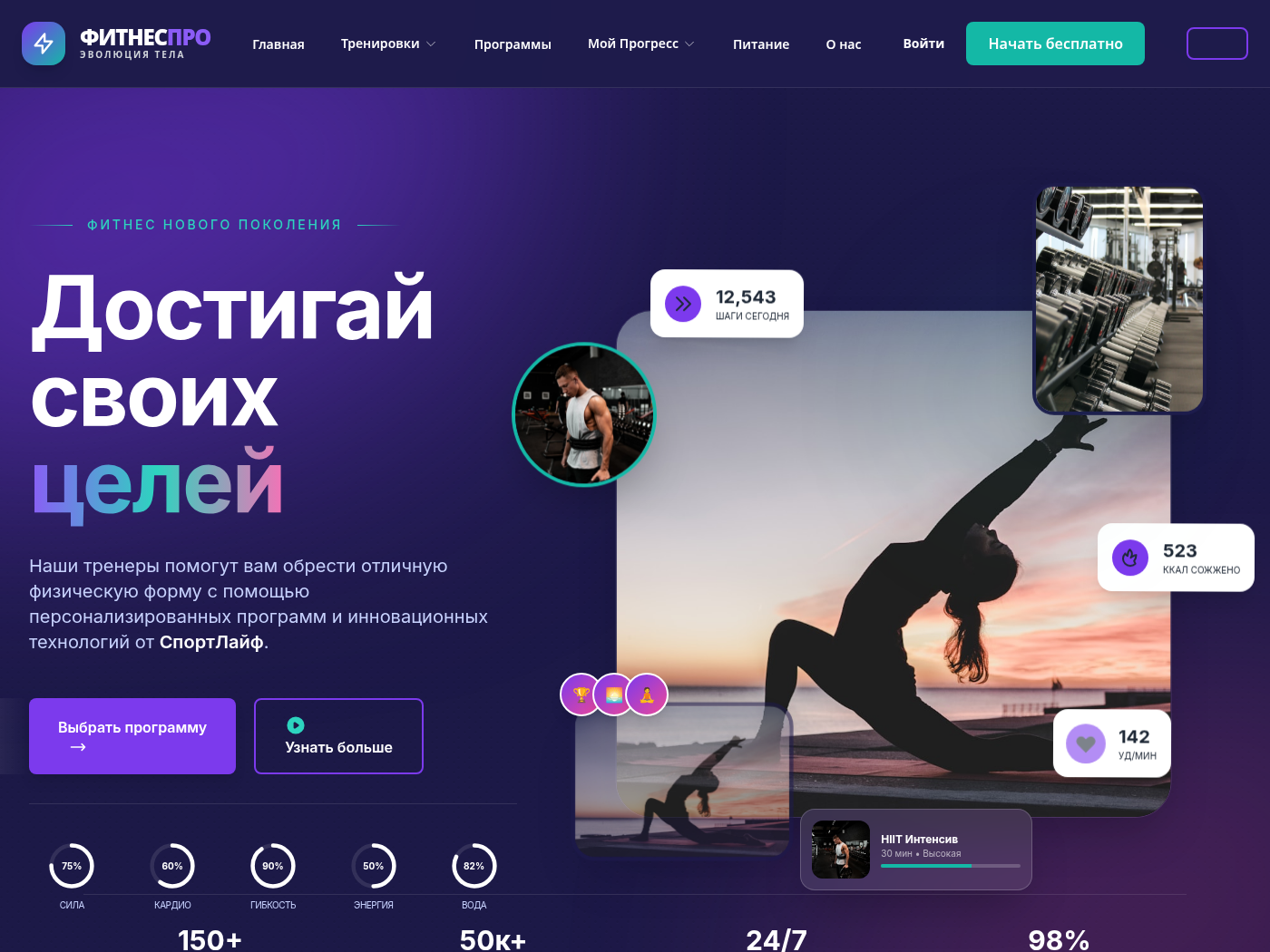
Dark Mode Pass ≥ 94
Crossfit Club
Dynamic

Crossfit Club

export: 20260205_184419

Sport Pass ≥ 88
Yoga Studio
Minimalist

Yoga Studio

export: 20260204_141012

Wellness Pass ≥ 91
Premium Spa
Luxury

Premium Spa

export: 20251017_224134

Premium Pass ≥ 95
Codestral 95% 3000+ combinations Gemini Pro 1.5 Quality Config-Driven Architecture
Project Conclusion

What this proves

Agent role

Shows how multiagent generation can be constrained enough to support real production experiments.

Agent role

Combines RAG context, route requirements, and generation roles before producing UI output.

Agent role

Uses agent routing to separate retrieval, layout generation, validation, and retry decisions.

Generation config

Keeps configuration contracts explicit so generated pages can be reproduced and audited.

Use the same approach for production systems that need AI acceleration without losing control.

Need RAG-assisted page generation that still has structure and QA?

The system pattern combines context retrieval, agent roles, config-driven generation, and review gates so AI output can become usable interface work.